
Trust Administration Attorney in Plantation, Florida
If you’re reading this, it’s likely that someone who passed away has named you as the trustee, which means you’re legally responsible for carrying out everything that the trust requires. Suddenly, you’re expected to manage assets, notify beneficiaries, pay debts, file taxes, and distribute property—all while grieving, and all under Florida law.
This is called trust administration, and it is not something to handle without a trust administration attorney. Carryl Law helps Plantation trustees and families get through this process clearly, correctly, and legally. It’s difficult to handle it all on your own properly, and our job is to take the legal side off your back.
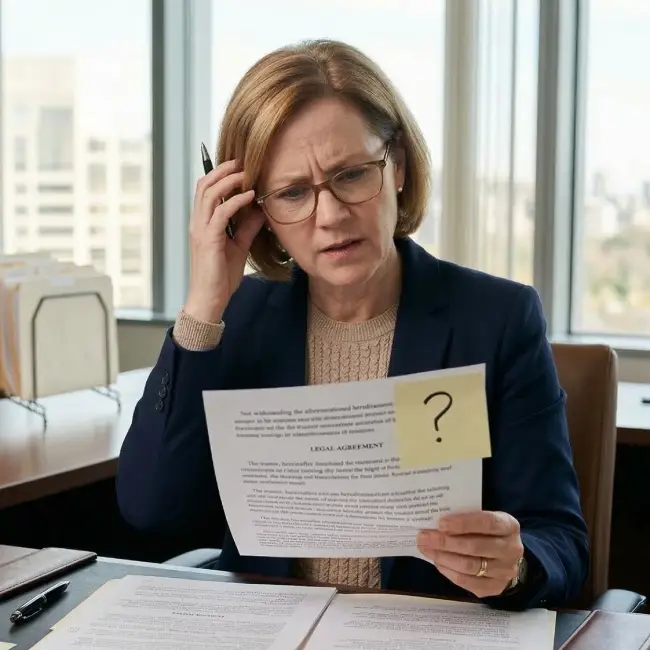
What Is Trust Administration, Exactly?
When someone creates a trust and later passes away, the trust needs someone to help with the process. The successor trustee named in the document has to step in and manage the process of wrapping things up. That process is called trust administration.
Under Florida Statutes Chapter 736 (the Florida Trust Code), a trustee has a legally defined set of duties. You are required to act in the best interests of the beneficiaries, keep accurate records, manage assets carefully, and distribute the trust’s property according to its terms. Failing to do this correctly (even unintentionally) can expose you to personal liability, such as lawsuits or legal ramifications.
Florida law does not give trustees a pass for honest mistakes.
This is why so many Plantation families work with a trust administration attorney from the start.
How a Trust Administration Attorney Helps You
Notifying Beneficiaries
Under Florida Statutes § 736.0813, you must formally notify every beneficiary within 60 days of death. Carryl Law drafts and sends every notice for you, in the exact format § 736.0813 requires.
Inventorying and Valuing Assets
Paying Debts and Expenses
Filing Tax Returns
Distributing Assets
Keeping Records and Accounting
What Happens if a Trustee Doesn’t Have a Trust Administration Attorney?
Florida law holds trustees personally responsible for mistakes. Under Florida Statutes § 736.1001, if you distribute assets too early, miss a creditor, or skip a required notice, you can be held liable out of your own pocket—not the trust’s.
If a beneficiary files a claim against you, it goes to the 17th Judicial Circuit’s probate division at 201 SE 6th Street in Fort Lauderdale. That process is expensive, stressful, and avoidable. Attorney Nicholas Carryl practices in that court regularly. Most trustees who work with Carryl Law never end up there at all.
Answering Frequently Asked Questions
Do I have to go to court to administer a trust?
Can I just distribute everything right away and skip the formal process?
What if there is no trust, just a will?

Schedule Your Consultation with Carryl Law
Being named a trustee is a responsibility, not just an honor. If you are handling a trust administration in Plantation or anywhere in Broward County, or if you want to make sure the trust you’re setting up today will be easy to administer later, Carryl Law is ready to help.
Attorney Nicholas Carryl serves Plantation and all of Broward County. Schedule a consultation and get a clear picture of what needs to happen, in what order, and how to protect yourself throughout the entire process.
About Me

Nicholas Carryl is an authoritative South Florida estate planning and probate attorney whose credentials establish his sectoral expertise, including a Juris Doctor (JD), magna cum laude, from Nova Southeastern University and a Post-graduate Diploma in Taxation with Distinction from the University of London. Further demonstrating his extensive legal education, he also holds the Legal Education Certificate (LEC), the Caribbean equivalent of a JD. His authority is maintained through active membership in key professional bodies, including InterActive Legal, a leading knowledge hub for estate planning specialists.